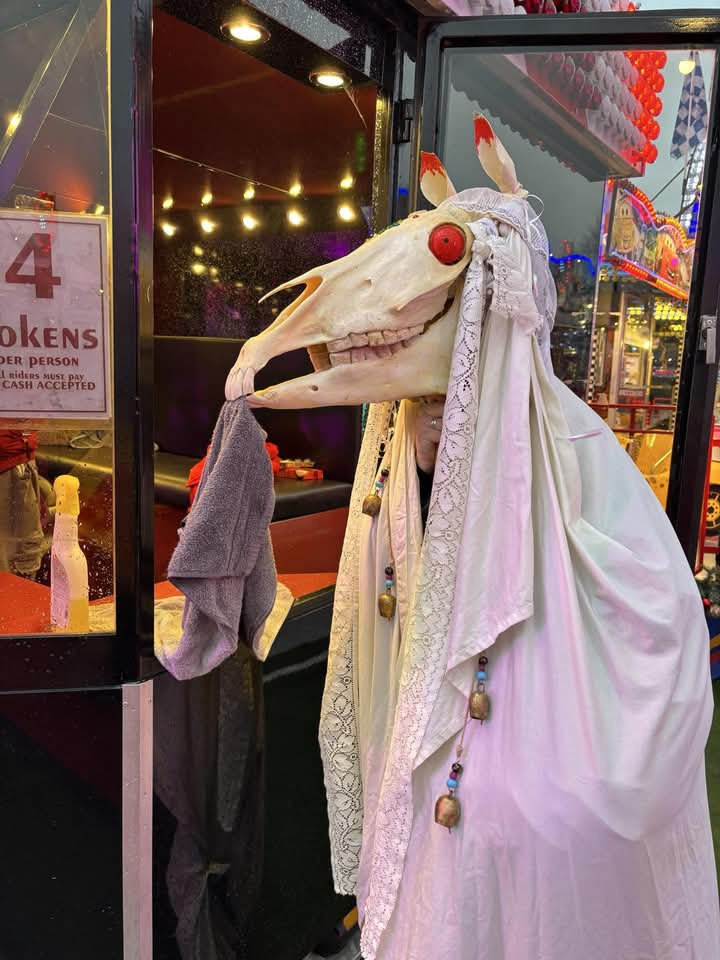
An English folklore revival is no longer just a feeling visible on social media or at crowded seasonal events. A major survey is beginning to put numbers around it.
The Guardian published a new analysis on 13 November examining why folk customs are drawing younger audiences looking for community, spirituality and a stronger connection to place. The report draws on the National Folklore Survey for England, a two-year project led by researchers at Sheffield Hallam University and the University of Hertfordshire, with Chapman University in the United States.
What the survey actually measured
The survey questioned 1,730 adults in England through Ipsos in July 2025. The sample was designed to be representative by age, region, gender, ethnicity, religion, education and working status.
Its scope was wider than old stories. Questions covered household rituals, seasonal gatherings, local legends, supernatural belief, online folklore and personal spiritual practice.
Early results show that folklore remains active rather than archived. Around one in three respondents said they believe in ghosts or spirits of the dead, while younger groups showed stronger belief than older respondents in several supernatural and contemporary-legend claims.
Why might younger people be returning?
Researchers and practitioners interviewed for Friday’s analysis connect the revival with post-pandemic isolation, screen fatigue, climate anxiety and a wish to meet people through shared local customs.
Those explanations are interpretations, not findings proved by the survey. What the research does establish is that folklore still circulates through communities, media and everyday behaviour—and that younger people are not simply inheriting it. They are reshaping it.
Verified finding or interpretation?
Verified: Ipsos questioned 1,730 adults in a sample designed to represent England’s population.
Research finding: Belief in ghosts and other supernatural claims remains widespread, with notable differences between age groups.
Interpretation: Community, climate anxiety, spirituality and screen fatigue may help explain renewed participation, but the survey does not establish a single cause.
Why today: The UK analysis was published within the present news window, while the survey’s formal summary appeared last week and the two-year project concludes in December. It offers evidence that old beliefs are being actively remade, not merely remembered.
Sources
- The Guardian · Why people are turning to folklore in our disconnected age · 13 November 2026
- National Folklore Survey for England · official project
- University of Hertfordshire · summary of the survey findings
- Sheffield Hallam University · younger respondents and supernatural belief
- Wikimedia Commons · Mari Lwyd in Caerphilly · Inle01UK · CC BY-SA 4.0
- Creative Commons · Attribution-ShareAlike 4.0 licence