
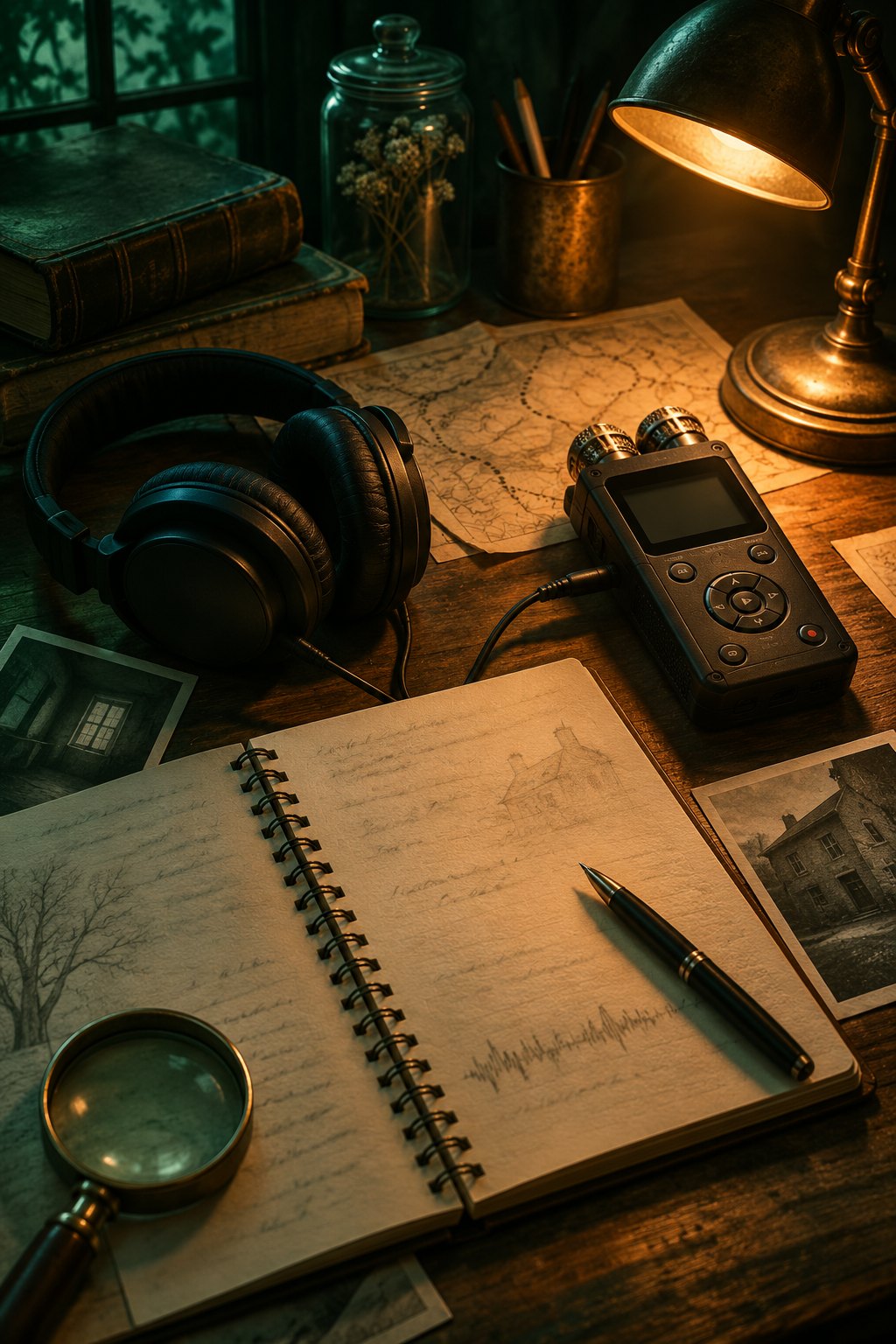
A strange dream, a missing file, a recorder that suddenly misbehaves: when you are immersed in a haunting account, an ordinary disruption can feel like another part of the case. A 2026 paper asks how such experiences are reported.
Research spotlight: the study was published on 26 March 2026. We are revisiting it in our 3 November Daily Brief; it is not a paper released today.
What the researchers examined
James Houran and colleagues surveyed a convenience sample of 167 people: 160 amateur paranormal investigators and seven credentialed frontier scientists. Participants retrospectively answered questions about unusual experiences while writing about ghostly episodes, including dreams, emotional changes, missing files and device problems. [1]
The authors report subjective experiences more frequently than events classified as objective in the questionnaire. That label describes the type of event reported; it does not mean the research independently verified a malfunction, a missing file or a paranormal cause. [1]
What it does—and does not—show
The paper discusses conventional possibilities including memory reconstruction, difficulty identifying the source of a memory, and cognitive load. Its analysis examines patterns in the responses. A self-selected, retrospective survey cannot establish that paranormal activity caused the reported events. [1]
Our view: the distinction between experience and explanation is the useful part. Someone can accurately describe feeling unsettled without knowing why a dream occurred or why equipment failed. Taking the person seriously does not require settling on one cause.
A better record for the next investigation
If an investigator wanted to examine this further, a useful next step would be a prospective diary: note events as they occur, define in advance what counts, and record uneventful periods too. Equipment faults could be checked against batteries, storage capacity, software changes and normal failure rates.
A comparison period spent writing about an unrelated subject would help ask a more precise question: do these disruptions become more frequent during paranormal work, or simply more noticeable?
The study leaves room for further investigation. It gives us questions to test, rather than a demonstration that something has followed an investigator home.