
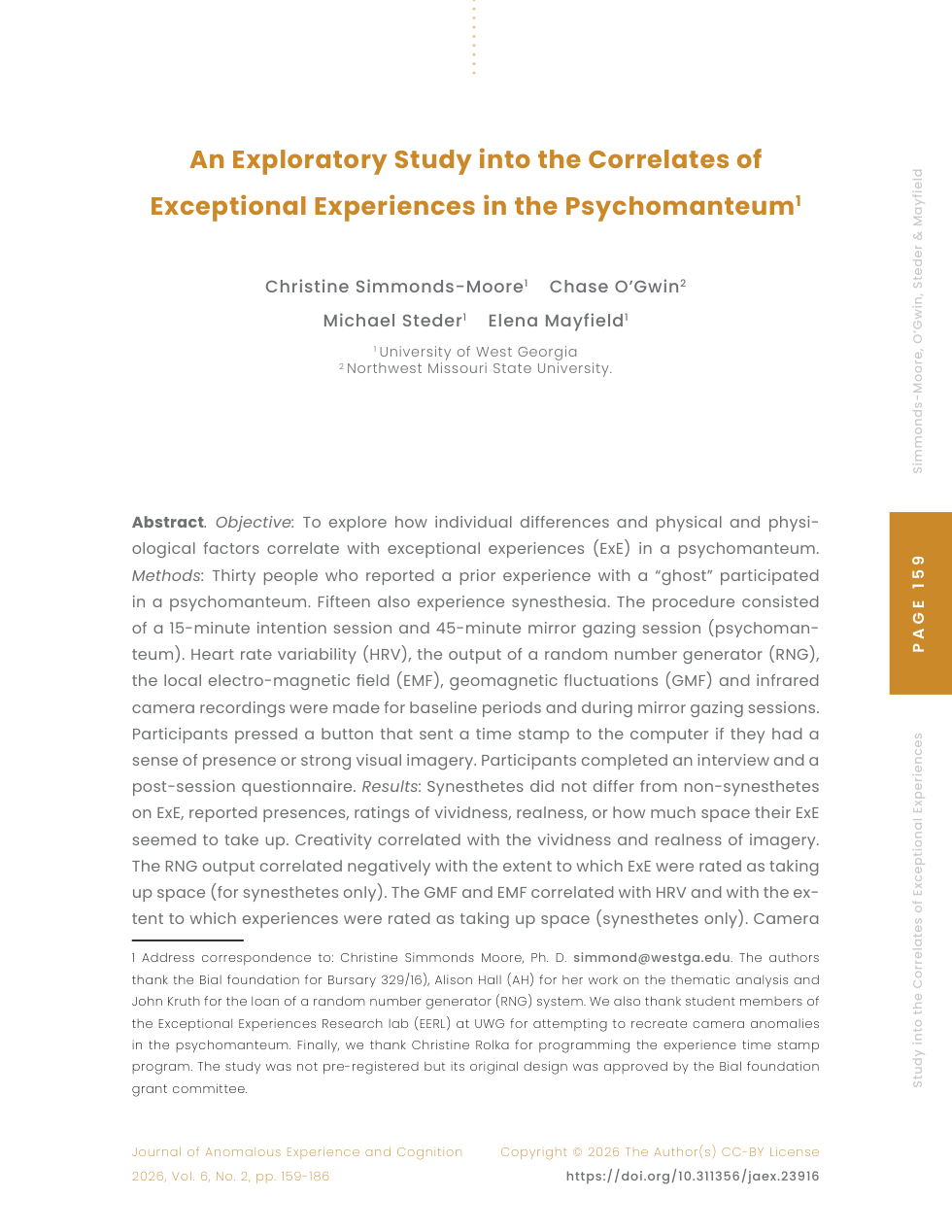
A peer-reviewed exploratory study placed 30 people who had previously reported a ghost experience in a psychomanteum: a dim mirror-gazing setting associated with perceived contact with the dead.
Half also reported synaesthesia. After a 15-minute intention period, participants completed 45 minutes of mirror gazing. Researchers monitored heart-rate variability, electromagnetic and geomagnetic conditions, random-number-generator output and infrared footage. Participants marked moments of sensed presence or strong imagery.
The synaesthesia group did not report more presences, more exceptional experiences or more vivid or realistic imagery. Creativity scores correlated with how vivid and real the imagery felt.
Other exploratory correlations involved environmental measurements, physiology and generator output, particularly within the small synaesthesia subgroup. Camera anomalies appeared during both baseline and mirror-gazing periods.
The study was not preregistered. Its small, selected sample and exploratory associations do not establish causation, a paranormal source for recording anomalies or the presence of an external entity.
Research spotlight: Published 6 October 2026, not today. The useful question is how subjective reports, environmental readings and recording artefacts should be compared.