
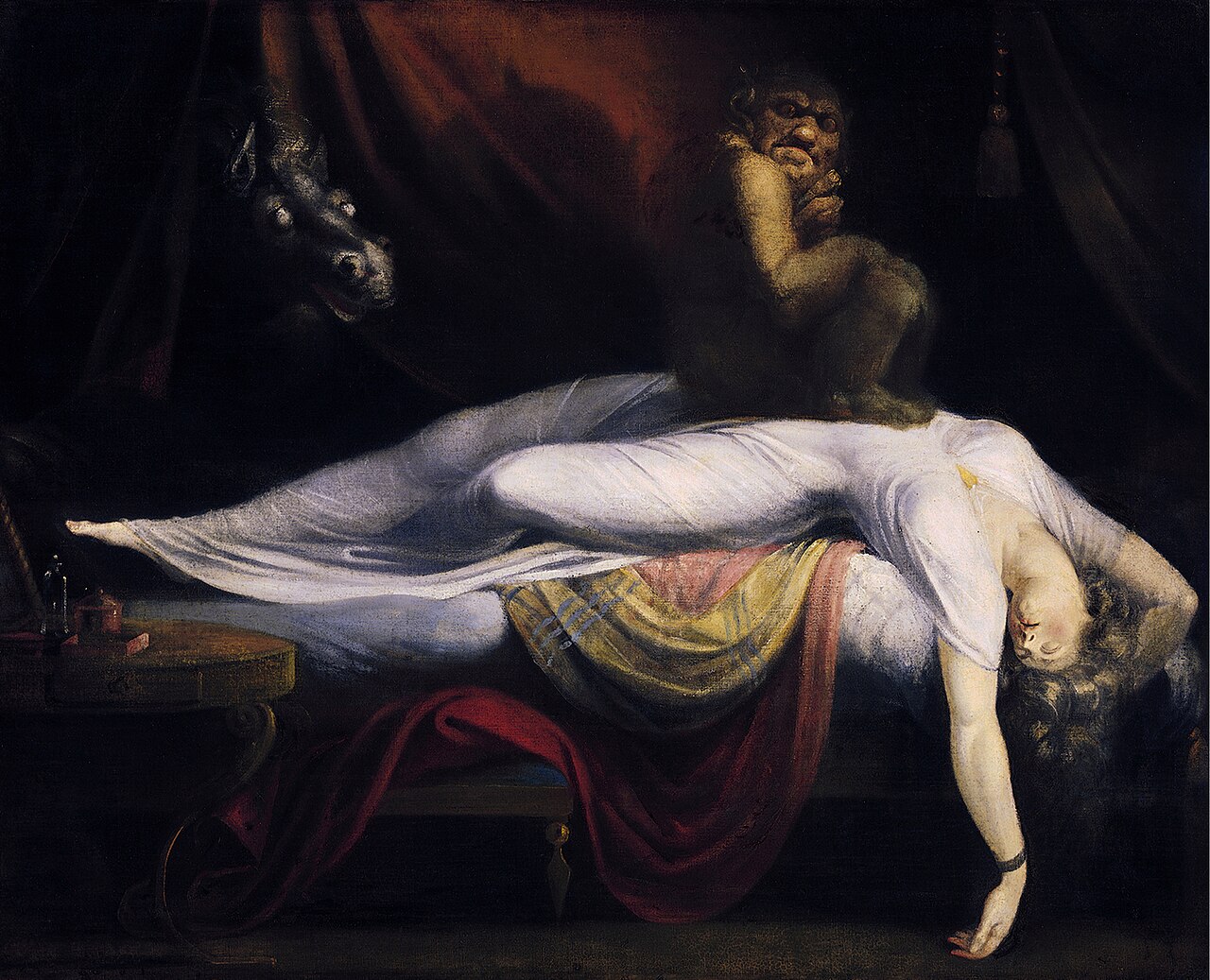
People who experience sleep paralysis can wake in a familiar room unable to move, convinced that somebody—or something—is approaching. The figure may be interpreted as a ghost, witch, demon, alien or culturally specific night visitor. The encounter can feel external and completely real.
Neuroscientist Baland Jalal revisits these experiences in The Phantom Mind: Insights from the Borderlands of Sleep, released in the UK by Allen Lane on 12 November 2026. The publication is new; the neurological model draws on an established body of sleep research rather than a newly published experiment.
Where waking and dreaming overlap
During rapid-eye-movement sleep, the brain suppresses most skeletal-muscle movement. In sleep paralysis, awareness returns before that temporary paralysis has ended. Dream imagery and threat processing can intrude into waking perception, producing sensed presences, footsteps, pressure on the chest, shadowy figures and out-of-body sensations.
Jalal’s cross-cultural work is especially relevant to folklore. The underlying experience has recurring features, while cultures supply different identities: Newfoundland’s Old Hag, jinn traditions, Japan’s kanashibari, the Italian Pandafeche and, in some modern accounts, alien abductors.
Experience, research and limits
Verified: The book was released on 12 November. Sleep paralysis is a recognised state at sleep onset or waking, and hallucinations or sensed presences are documented in scientific literature.
Witness experience: Individual accounts document what people perceived; they do not independently establish an external being.
Research interpretation: REM-related paralysis, dream imagery, fear and cultural expectations may combine to create a vivid intruder experience. That explanation does not make the fear unreal.
Limit: The model does not prove that every nocturnal supernatural report is sleep paralysis, and it cannot retrospectively diagnose a historical witness without suitable evidence.
Why today: The UK publication arrived two days ago and renews discussion of a phenomenon sitting directly between ghost folklore, witness testimony and neuroscience.
Sources
- Penguin / Allen Lane · official book page and UK release date
- University of Cambridge · sleep paralysis and paranormal interpretations
- Jalal · The neuropharmacology of sleep paralysis hallucinations
- Jalal et al. · cross-cultural research on the Pandafeche tradition
- Wikimedia Commons · Henry Fuseli, The Nightmare · source and public-domain status