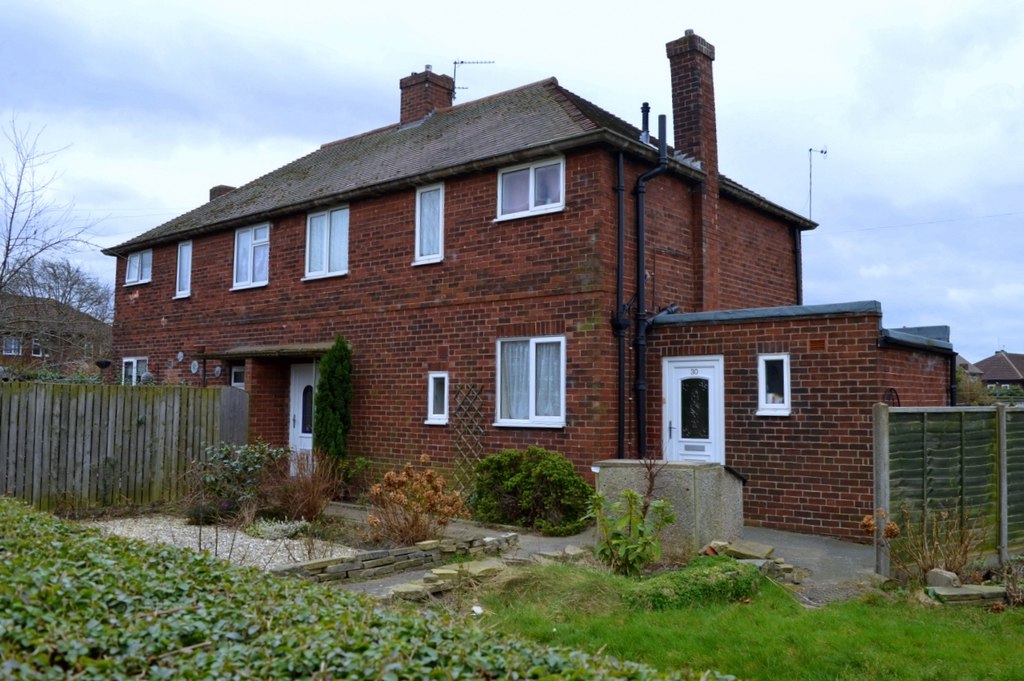
In the photograph, there is nothing to tell you which house you are supposed to be afraid of. It is a daylight view of a red-brick semi on the Chequerfield estate in Pontefract, West Yorkshire. Mark Stevenson took it in March 2015, almost half a century after the Pritchard family’s first reported disturbances. The address is 30 East Drive. The story that made it famous begins with a teenager, his grandmother and a mess that, according to the family, kept coming back.
The first weekend
The venue’s account puts the opening episode over the August bank holiday in 1966. Fifteen-year-old Phillip Pritchard was at home with his grandmother, Sarah Scholes, while his parents were away. They reportedly saw fine white powder settling in the room, but could see no obvious source. Phillip’s aunt was called over to help. In the kitchen, the family said, pools of water appeared and returned as she tried to mop them up.
30 East Drive’s account of the disturbances · Alan Murdie’s Fortean Times retrospective
It is an oddly domestic opening for a story that would come to be told as a violent haunting. At first, the problem was something you might try to clean up before the family came home. The later accounts tell of doors banging, bedding pulled from beds and damage to a framed wedding photograph. Somewhere between those first puddles and the stories about the staircase, the disturbance acquired a name that sounded as if it belonged to a lodger. The family called it Fred.
Venue history · The Yorkshire Post’s 2012 retrospective
The account from the stairs
The most disturbing claim centres on Phillip’s younger sister, Diane. In the version Alan Murdie reconstructs from later interviews, Diane said something unseen pulled her up the stairs. Her mother and brother reportedly tried to pull her free. Colin Wilson said Diane described marks left on her throat. He took her account seriously enough to reconsider his own theory that poltergeist activity came from the unconscious minds of those living through it. That was Wilson’s interpretation of the testimony he gathered years later. The material reviewed for this feature offers no independent confirmation of what caused the reported incident.
Murdie’s reconstruction of the interviews · Bibliographic record for Wilson’s 1981 book
The chronology is harder to pin down than many retellings suggest. Murdie places the main disturbances between 1966 and 1968. The Yorkshire Post, writing in 2012, dates a later outbreak to 1972. The house’s own introduction places the disturbances broadly in the late 1960s and early 1970s. They agree on the 1966 opening, but the sources reviewed here give conflicting dates for the later episodes.
Fortean Times retrospective · The Yorkshire Post · Venue introduction
How Fred became the Black Monk
Joe and Jean Pritchard said they saw a dark, hooded figure in their bedroom. Murdie also recounts the testimony of next-door neighbour May Mountain, who told Wilson she had seen a tall figure in a black habit in her kitchen. In her account, the face was hidden, and she felt curiosity rather than fear before the figure disappeared. That detail is easy to lose in a story usually told through its most frightening moments.
The Yorkshire Post · Fortean Times retrospective
There was a real Cluniac priory in Pontefract. Historic England records that St John’s was founded around 1090. In the local legend, a monk from the priory was hanged, and the house stood near an old gallows site. That story gave the witnesses’ dark figure a possible identity and the poltergeist a past. Murdie reports that a search of historical records failed to corroborate the alleged execution. The priory is documented. The identity of the figure the witnesses described remains unknown.
Historic England’s priory record · Fortean Times retrospective
A new audience for an old story
Wilson’s Poltergeist! A Study in Destructive Haunting appeared in 1981. The story reached cinema audiences in 2012 through When the Lights Went Out, a fictionalised retelling. Then, on 11 November 2021, the Wakefield Express reported that paranormal investigator Baz Woodhouse had taken a photo during a stay at the house and believed it might show the Black Monk. The report establishes that Woodhouse made the claim. It gives no independent basis for identifying the image as the figure described by the Pritchards decades earlier.
Wilson’s book record · The Yorkshire Post on the film · Wakefield Express report
A photograph of the house can bring you to the address. To get any closer, you have to decide how much weight to give memories gathered years after the events, and where to draw the line between the witnesses’ descriptions and the explanation that came to dominate the story. Start with the figure Joe and Jean said they saw. If you set the name “Black Monk” aside, what would their account alone lead you to conclude?